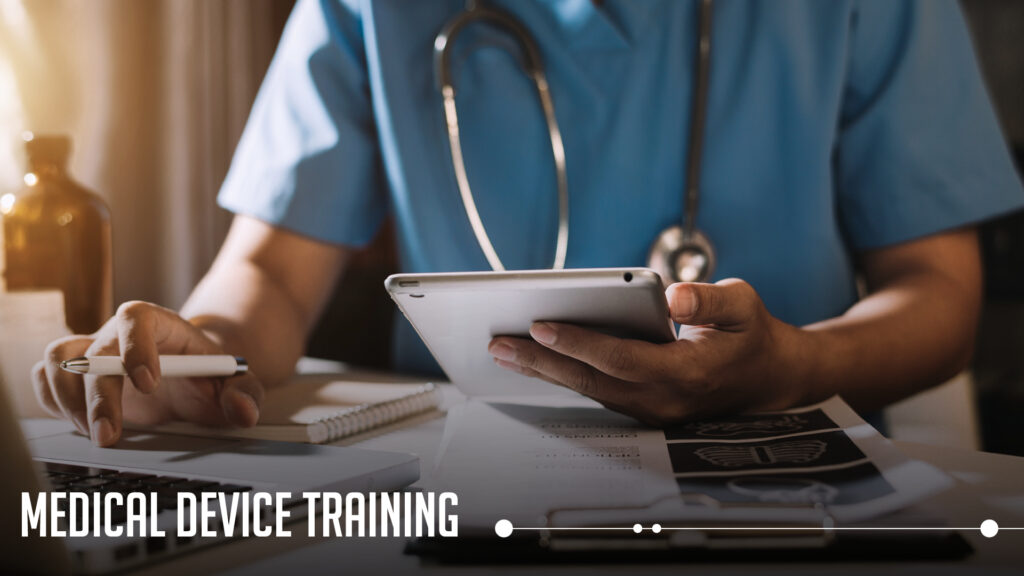
Medical device companies that employ targeted training programs experience 31% shorter regulatory review times and 40% fewer compliance problems. The performance gap between trained and untrained employees emphasizes the value of targeted education in an industry in which precision determines patient safety as well as business success.
The medical device sector demands expertise in a wide range of specializations – from ISO 13485 quality management systems to MDR compliance, clinical evaluation processes to post-market surveillance. These requirements cannot be fulfilled with generic corporate training, and teams are left insufficiently prepared to manage the regulatory intricacy they face on a day-to-day basis.
Regulatory affairs online courses
Online learning platforms revolutionized the study of regulatory affairs, offering medical device professionals easy access to expert training. Courses in regulatory affairs online encompass everything from European MDR legislation, FDA 510(k) processes, and globally harmonized standards like ISO 14155 for clinical investigations.
Interactive modules guide registrants through real-life regulatory scenarios, from technical document preparation to conversations with competent authorities. These programs employ case studies of real-life medical device submissions such that students can apply decision-making in managed environments before being able to apply knowledge to actual projects.
The asynchronous delivery enables global teams to participate regardless of time zone, and recorded sessions ensure message consistency at organizational levels. Progress in learning is tracked by assessment tools and knowledge gaps are identified, thus ensuring training investments yield returns in measurable competency improvements.
Training and continuing education
Medical device training extends beyond new compliance with regulatory directives to include the full product lifecycle. Quality assurance professionals require in-depth knowledge of risk management principles based on ISO 14971, whereas clinical affairs departments must possess knowledge based on Good Clinical Practice guidelines and statistical analysis methods.
Role-specific competencies are covered in specialized curricula: material scientists’ biocompatibility evaluation, device engineers of connected devices’ cybersecurity policies, and pharmacovigilance protocols for post-market surveillance teams. Every program blends today’s industry best practices with tomorrow’s regulatory trends so that the participants are ahead of shifting compliance landscapes.
Clinical research excellence
Clinical research training for medical device professionals comprises protocol design, investigator site management, and data integrity needs. Training encompasses the device trial-specific aspects, which include issues with the learning curve, standardization of surgical techniques, and pivotal trial endpoint selection.
Trainees acquire skills to oversee complex multi-center clinical trials in accordance with the regulatory expectations of different jurisdictions. Practical solutions to actual problems like patient recruitment strategies, adverse event reporting timelines, and clinical data management system validation are covered through training modules.
Quality management systems
Hands-on QMS implementation training is the focus of quality training courses for medical device firms. Trainees acquire skills to create effective CAPA systems, conduct effective management reviews, and apply supplier qualification procedures that would meet regulatory approval.
Training documents address standard findings during audits and offer templates for continuous improvement projects. Effective QMS implementations are demonstrated by case studies that reflect how ideas become operational excellence and sustained compliance performance.
Market access strategy
Market access training offers health technology assessment tools and health economics assessment tools to professionals in the health device industry. They discover how to develop compelling value propositions that resonate with payers, clinicians, and hospital administrators.
These programs offer coverage of real-world evidence generation, budget impact modeling, and stakeholder engagement strategies in all healthcare systems. Training modules cover the unique challenges of medical device commercialization, ranging from demonstration of clinical utility to long-term cost-effectiveness studies.
Adaptable training solutions for medical device firms
Custom training solutions respond to unique company needs while utilizing industry-standard models. Organizations enjoy material created together with in-house subject matter experts so that it will be relevant to real-world business issues and operational environments.
Flexible format delivery accommodates multiple learning styles and logistical requirements. Face-to-face workshops provide hands-on learning and team building, whereas online sessions facilitate cost-efficient delivery in multiple locations. Hybrids take the best from each modality, maximizing learning advantage while minimizing travel requirements.
Training programs incorporate company-specific processes, documentation templates, and workflow procedures. This customization ensures application of acquired knowledge and skills on the job to existing tasks. Students practice with examples and scenarios that are close to home, speeding up retention and utilization of knowledge.
Faculty quality and industry expertise
Experienced industry practitioners with decades of experience in medical devices comprise program faculty, who offer hands-on experience from regulatory agencies, consulting, and device manufacturers. Faculty collectively span the entire product development process from design to post-market surveillance.
Faculty are actively involved in professional organizations, regulatory working groups, and industry conferences. This keeps training material up to date with the latest regulatory interpretations, creating guidance documents, and evolving industry best practices.
The co-operative approach used by LS Academy and client businesses creates learning experiences that address real business challenges while developing sustainable internal capabilities. Through the delivery of 877 programs to 13,389 professionals, the tested methodology has a high 97% satisfaction rate from participants.
Medical device training investments yield concrete returns in the form of reduced compliance violations, accelerated product introductions, and enhanced team efficiency. Companies seeking to increase their regulatory robustness and competitive edge may wish to explore customized training solutions at LS Academy’s training services to meet specific organizational requirements and program development opportunities.