

Introduzione
Publishing scientific articles in peer-reviewed journals is essential for communicating medical research. Scientific papers are also required to meet ethical, transparency, and regulatory requirements for pharmaceutical and medical devices. However, writing a scientific paper and getting it accepted in a reputable journal can be time-consuming, complicated, and frustrating.
This workshop will help you start writing scientific articles for peer-reviewed journals in the right way, effectively communicate your findings, and optimise the writing process.
Attendees will benefit from the perspective and experience of two international experts in writing scientific papers and their management. Between them, they have successfully published many hundreds of articles across a wide variety of scientific and clinical specialties.
This is a two-module interactive workshop that includes lessons, discussions, exercises, and intensive group work. Each module is 4 hours.
Before participating in the workshop, participants will be required complete a pre-workshop assignment intended to evaluate current knowledge and help prepare for further in-workshop exercises.
The first of the two modules focuses on the environment of scientific communications and on the standards that scientific journals require. The module is intended to help participants develop a perspective that will get them started on the right foot to successfully publishing their articles.
The second module focuses on building a logical, structured, and efficient process for creating an article that effectively communicates the key results of a study. During the module, participants will work together on a series of exercises in which they will put the principles into practice.
AGENDA
Pre-workshop assignment: Read a clinical study report summary and answer questions
Module one – The basics of scientific articles (Andrea Rossi)
- Introduction
- Review of the pre-workshop assignment
- The environment of scientific communication
- Guidelines
- The basics of scientific communication
- The reader-centred approach to writing
Module two – Organising your writing projects (Phil Leventhal)
- Using problem statements to develop a coherent concept for an article
- Selecting the data to present
- Expanding the problem statement into a concept outline to organize the article
- Identifying the target audience and selecting an appropriate target journal
- Writing an effective title
- Expanding the concept outline into a detailed outline and using reporting guidelines to help
This course is for anyone who needs to write scientific articles for peer-reviewed journals, such as medical advisors, scientific writers, medical writers, medical liaisons, scientific communicators, researchers, clinicians, and medical information professionals.
Participant experience
Participants need to be familiar with the basics of clinical research and medical writing.
Interactive workshop with practical exercises and application to participants’ daily activities.
Docente/i
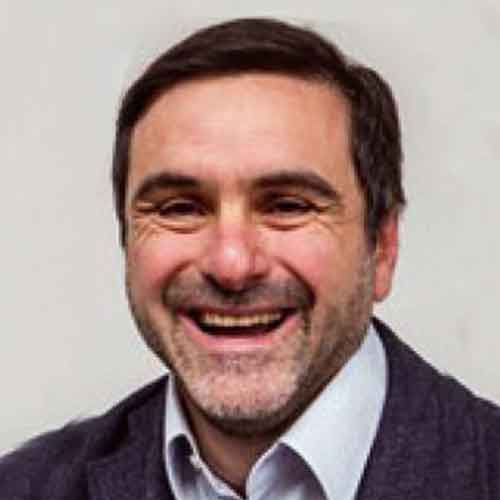
Andrea Rossi
Andrea has more than 30 years of experience in clinical research and physician relations. He is the author of more than 400 publications and articles, including more than 70 in peer-reviewed journals. He has also managed and written most regulatory documents and coordinated the medical writing activities of regulatory submissions.
He is the past president, workshop leader, chairman of the study group on scientific communication and artificial intelligence, chair of the Italian group, and ambassador for the European Medical Writers Association (EMWA), of which he was president. In addition to his professional activities and training in medical schools, Universities, research centers, and medical-scientific societies, he is a speaker and chairman at several conferences.
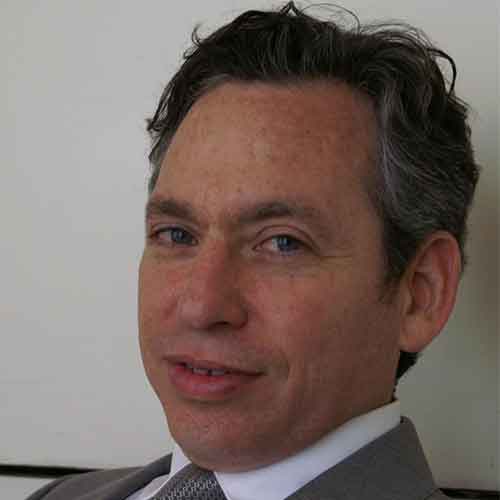
Phillip Leventhal
Phillip Leventhal, PhD is a Manager of Medical Writing and Healthcare Communications at Evidera-PPD, where he specialises in scientific writing. He has nearly 20 years’ experience as a medical writer, has written and edited hundreds of peer-reviewed articles, and has worked extensively with, and trained, non-native English speakers in scientific writing. From 2012–2020, Phil was the Editor-in-Chief of the journal Medical Writing, and since 2010, has led professional workshops and academic courses on scientific writing throughout Europe and North America.
This online training is divided in 2 modules:
Module 1 | 17 November 2021 – 09:00 am – 1:00 pm CET
Module 2 | 19 November 2021 – 09:00 am – 1:00 pm CET
Some days before the online training you will receive all details about the connection.
The course will proceed with a minimum number of participants. Should this number not be reached the registered participants will be notified one week prior to the commencement of the course.
Early Bird: € 880,00* (until 20 October 2021)
Ordinary: € 1.070,00*
Freelance – Academy – Public Administration**: € 570,00*
* for Italian companies: +22% VAT
** Early Bird discount not applicable to Freelance – Academy – Public Administration fee
The fee includes: tuitions, organizational office assistance, teaching materials and attendance certificate that will be sent after the training via e-mail.
Newsletter

Registrati

Versione Stampabile
Cosa saprai fare dopo il corso


Online interactive training on Zoom platform.
LS Academy will provide the access link to the virtual platform a few days before the training.